🌐 WIOT360 — A Unified IoT & Transportation Management Ecosystem
Case Study | Product Design, UX Strategy, Design Leadership
“Designing at scale isn’t just about aesthetics — it’s about making complex systems feel simple and human, while supporting millions of edge-case decisions behind the scenes.”
🧠 Project Background
WIOT360 is a leading IoT SaaS company focused on intelligent fleet and transportation management. While it initially specialized in school bus safety, the platform has since expanded into a full-suite ecosystem of 21+ services tailored for governments, private logistics firms, educational institutions, and city-wide transit providers.
Operating primarily in the UAE and MENA region, WIOT360 is now gaining global momentum, offering real-time tracking, AI-enabled telematics, high-security vehicle monitoring, and smart logistics — all wrapped in a multi-platform digital solution.
🎯 My Role & Responsibilities
I served as the Lead Product & UI/UX Designer for the entire WIOT360 ecosystem, overseeing:
The design of all 21 services and their corresponding dashboards
Leadership of an offshore design team (client’s internal team) who executed based on my direction
Full UX strategy from research to deployment
Creation of multiple mobile apps, complex web dashboards, and marketing site
A/B testing, usability feedback loops, and continuous iteration
Deliverables that spanned: wireframes, lo-fi/high-fi prototypes, UI systems, brand extensions, and performance-focused design assets
This was not just a design project — it was a test of leadership, process optimization, and the ability to architect a modular design system capable of scaling across industries.
🛠️ The Problem
The client wanted to transform what was originally a single-use transportation platform into a multi-sector, cross-device ecosystem. They needed:
A modular UX/UI architecture adaptable for 21+ services
A highly visual, data-rich design language for dashboards
End-user-focused mobile apps for parents, drivers, and transport managers
A scalable, geo-fenced, AI-driven system that communicates real-time alerts and decisions
A modern brand experience that communicates trust, innovation, and functionality
🧪 My Design Process
Approach: I combined Design Thinking, User-Centered Design, and Agile methodologies across sprints.
💡 Steps I Followed:
Define the Objective Set design goals with stakeholders and engineering leads.
Understand the Problem Mapped business logic and usage bottlenecks.
Market Research & Trends Identified regional patterns across UAE’s transportation systems.
Qualitative Research Conducted interviews with drivers, admins, and transport leads.
Quantitative Data Review Analyzed analytics, support queries, and drop-off rates.
Persona Building & Empathy Mapping Mapped the behaviors and challenges of parents, school admins, and transport firms.
Service Blueprint Mapping Illustrated platform-wide interconnectivity and dependencies.
Competitor & Global Benchmarks Referenced competitors like Zonar, Samsara, and SafeStop for insights.
Design Solutions Introduced component-based design patterns for better maintainability.
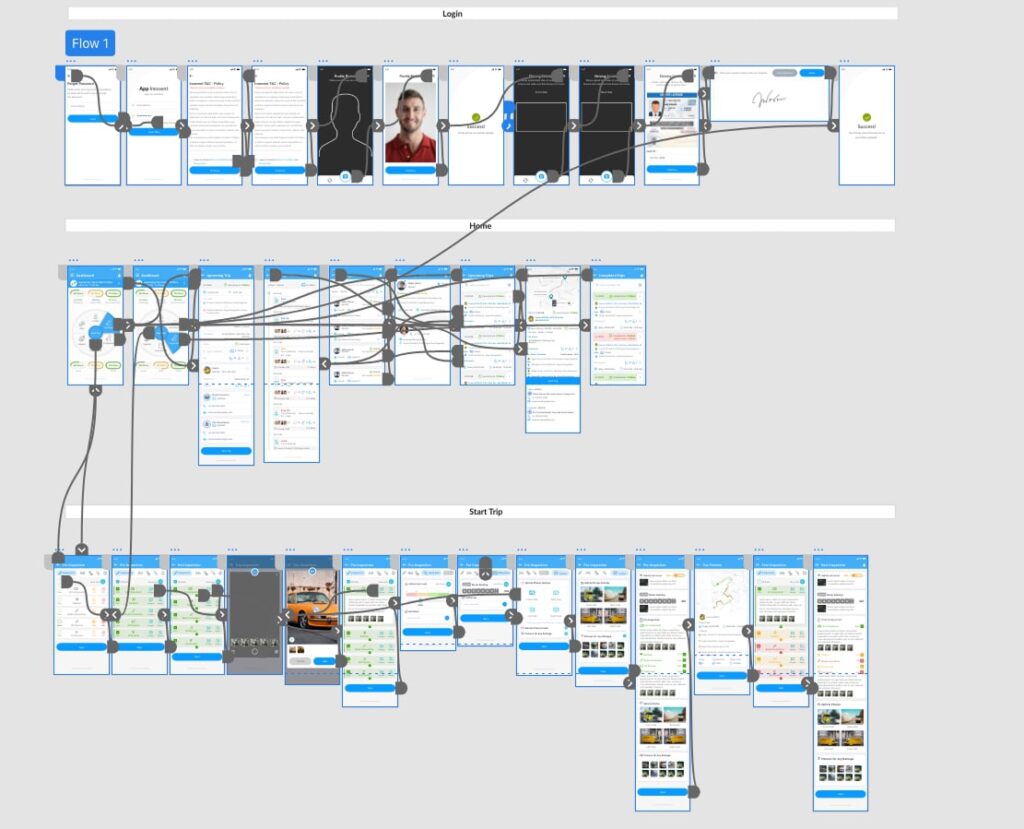
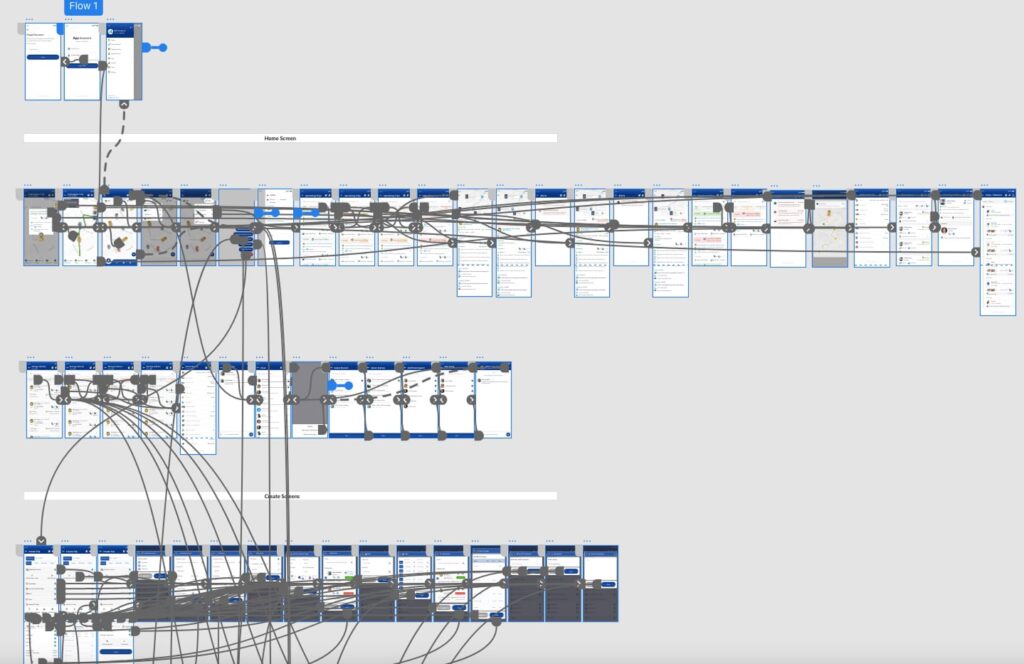
User Journey & Flow Charting Built journey maps across user types.
Wireframes & Prototypes Created interactive flows to simulate mobile and web experiences.
High-Fidelity UI Finalized design systems in Figma with component libraries.
Usability Testing & A/B Testing Performed iterative testing to refine information hierarchy.
Implementation Support Worked closely with the offshore dev team to ensure pixel-perfect execution.
[Journey Map of Driver & Parent Apps]
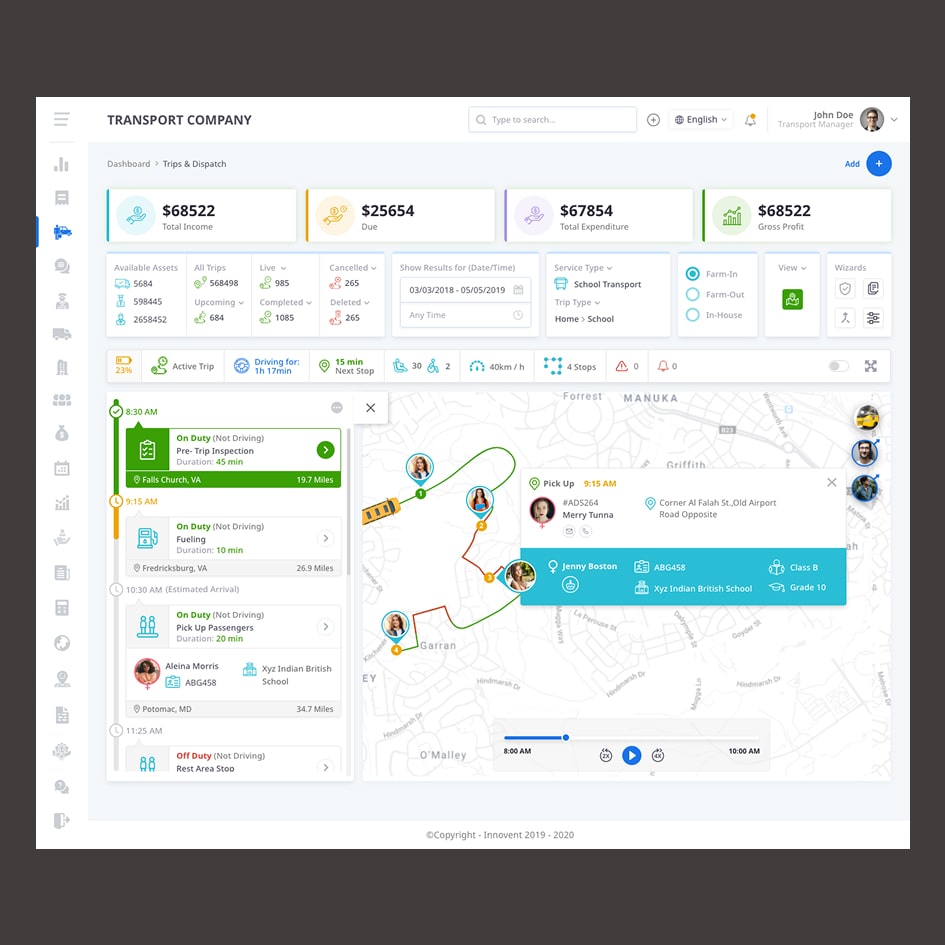
[Wireframes of Transportation Dashboard]
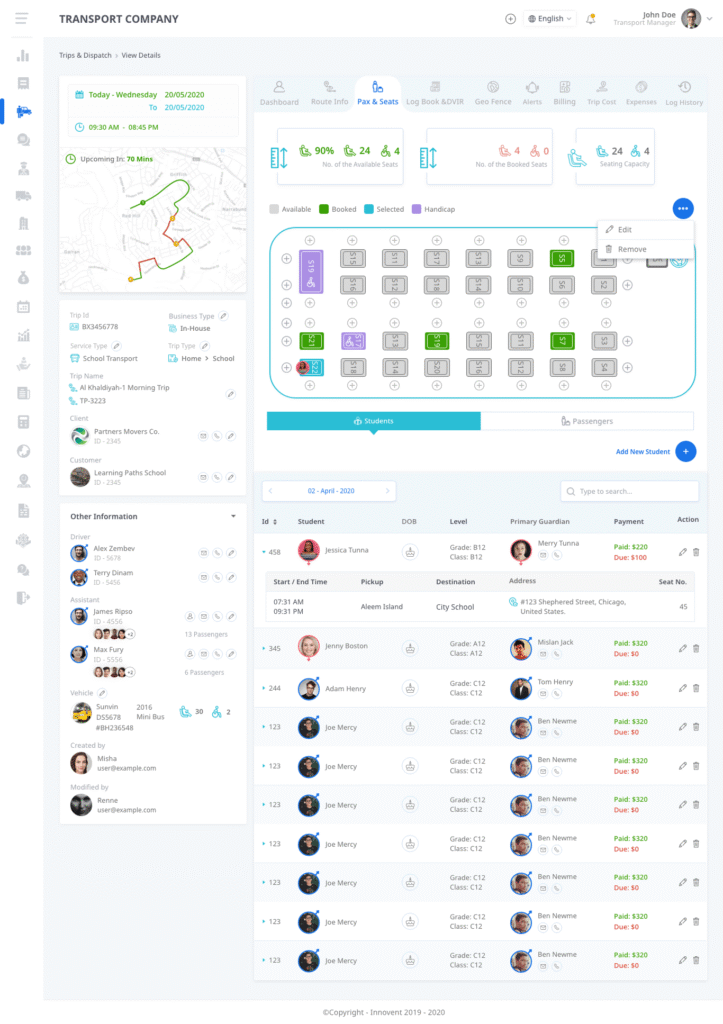
[Final High-Fidelity UI for Bus Seat Map Feature]
🧭 Scope of Design
🧩 Dashboards Designed:
School Bus Management Dashboard
Employee Transport & Shift Scheduling
Transport Company Interface (Fleet Overview, Compliance)
Jet Ski Dispatch Dashboard
Garbage Truck Monitoring Dashboard
Admin & Super Admin Roles
Reporting & Analytics Panels
Each dashboard was modular, allowing services to be toggled on/off based on the client’s service contract.
📱 Mobile Apps Designed
👨👩👧 Parent App
Bus tracking
Live alerts (arrival, departure, zone breach)
Profile, subscription status, multi-child access
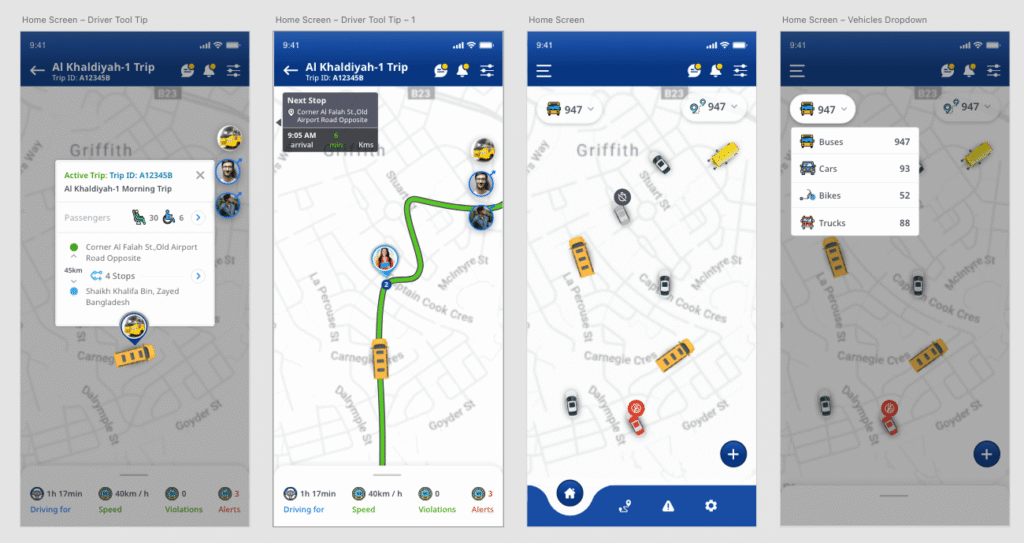
🧑✈️ Driver App
Fuel log, expenses
Pre/post vehicle inspection checklist
Attendance, shift logging (8-hour duty)
HR, payroll, documents, profile
🏫 Admin App
Route planning, fleet status, analytics
Bus occupancy maps (seat layout and availability)
Emergency alerts, geofence breach notifications
[Mobile App Screens for Driver Fuel Log and Inspection Form]
[Parent App GPS Tracking and ETA Screen]
📊 Data & Metrics
Since much of this was a new system launch, early qualitative feedback and system metrics were essential:
Used Hotjar for early session recordings & heatmaps
Monitored user drop-off with Google Analytics Funnel Tracking
Integrated feedback surveys into staging builds
Conducted remote usability testing via Lookback and Google Meet
Reduced onboarding confusion by 37%, as seen via survey and heatmap behavior
Achieved 90% success rate in key task completions across user flows (ex: trip logging, location tracking, report generation)
💬 Client Collaboration
I worked directly with Leo Lahlou (CEO & Stakeholder) and his internal design + engineering teams. I led design sprints, presented direction, and helped them evolve their own design processes — from organizing component libraries to improving UX workflows.
“WIOT360 gave me the opportunity to lead, build, and mentor beyond the visual layer — into systems thinking, human behaviors, and operational design.”
🎉 Outcome
21 Services Scaled from a unified design system
A full brand + platform transformation
Mobile apps + dashboards + landing page + marketing site designed and shipped
A modular platform architecture ready to scale globally
Recognized internally as a major success by stakeholders, partners, and users
🧾 Final Takeaway
This project helped me:
Evolve my skills in designing IoT + SaaS dashboards at scale
Lead a team cross-functionally, across time zones
Reinforce human-first systems thinking for security-focused environments
“Designing with data, security, and empathy — that’s the sweet spot I aim for.”